
Learn more about RECOVER's consumer and community involvement activities.
Consumer involvement case studies
2020 Case studies
You can view case studies and examples of consumer involvement with researchers at RECOVER during 2020.
You can also view summary slides (PDF, 526.5 KB) of the outcomes of these activities.
If you have any queries about our consumer involvement activities, please contact our Knowledge Translation and Consumer Engagement Officer, Alison Bell via recover@uq.edu.au
2020 Consumer & Community Forum
19 November 2020
Wrap up
RECOVER hosted its second Consumer & Community Forum via Zoom on 19 November 2020.
The forum provided an overview of the types of consumer engagement activities occurring at RECOVER, along with group activities and discussions designed to explore ways that consumers can become more involved.
This forum was attended by people affected by injury, interested community members and health professionals.
The event program was as follows:
- A welcome to country and a welcome to all attendees from the Director, Professor Trevor Russell
- An overview of the RECOVER consumer engagement program
- A description of how consumer engagement differs from research participation
- Three presentations from research staff giving examples of how RECOVER researchers are engaging consumers in their research
A copy of the forum presentations (PDF, 1.8 MB) can be downloaded here.
After a break, we sought feedback from attendees on the following topics:
- The benefits of involving consumers in research
- The draft consumer engagement framework
- Identifying RECOVER consumers
- Ways RECOVER can connect with consumers, including how to expand our mailing list

2019 Consumer & Community Forum
12 November 2019
Wrap up
On the 12th November 2019 RECOVER held its first ever consumer and community forum. The forum was held at the Victoria Park Golf Complex, Herston. The event was free with morning tea and lunch provided for all attendees.
The event was designed as a discussion forum whereby researchers could explore what consumers think about our research and how they could be more involved in the planning and design of research studies.
The morning started out with a welcome from the then Director, Professor Deborah Theodoros[1].
Alison Bell, Knowledge Translation Officer, then presented an overview of the day’s activities along with slides explaining ‘What is consumer involvement in research?’
There were three short presentations on the research being conducted at RECOVER by the three research programs:
- Technology-enabled rehabilitation
- Return to everyday life and work
- Improving Health Outcomes After Musculoskeletal Injury
A copy of the forum presentations can be downloaded here.
After morning tea the attendees broke into groups. There was lively discussions around the room as attendees worked on responding to the following questions:
- What did you learn about RECOVER from the presentations that you did not know before today?
- What has been your previous experience with research?
- What topics would you like to see researched by RECOVER?
- Would you like to be more involved in RECOVER’s research in the future and if so, how?
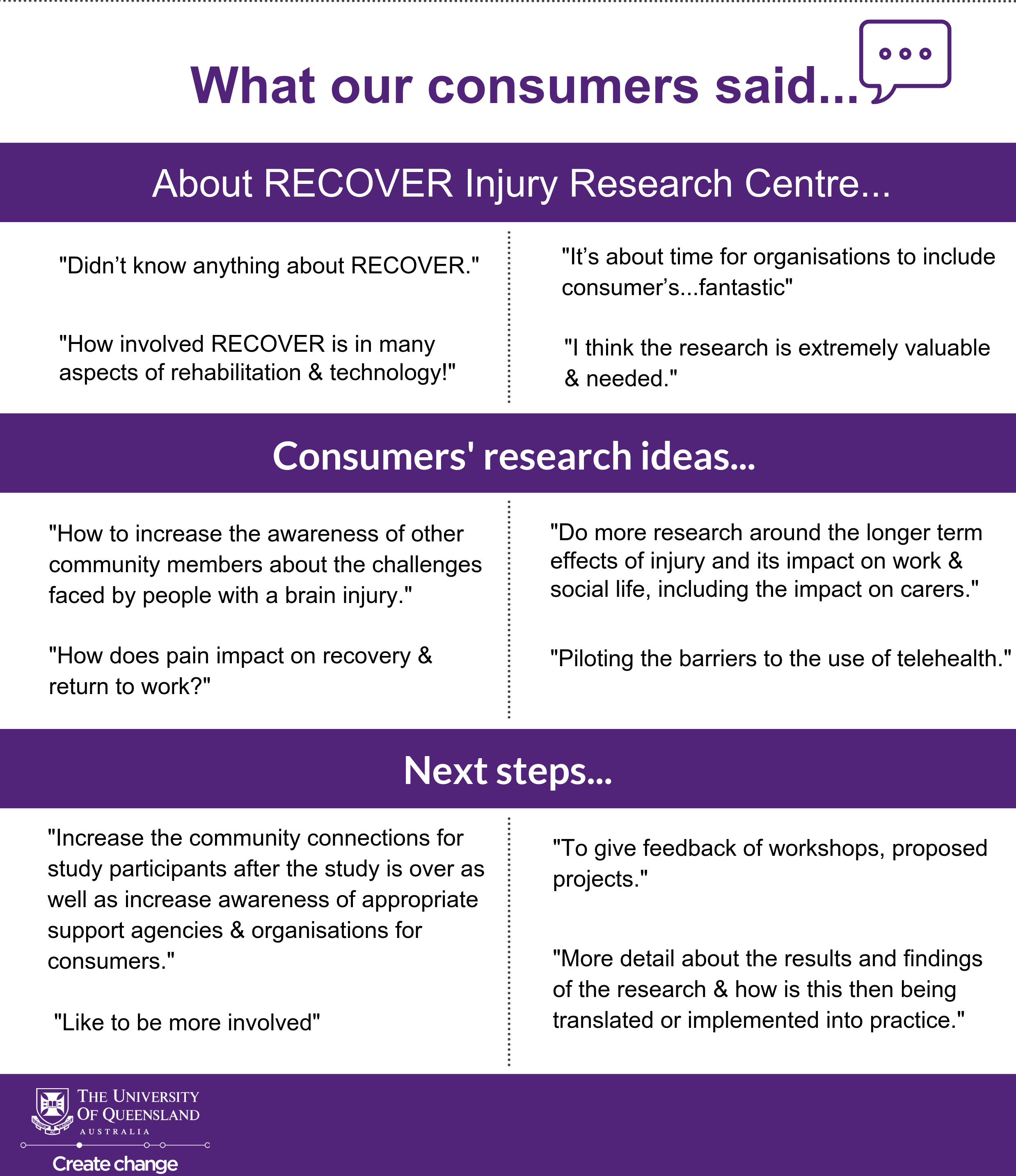
Responses to these questions[2] were extremely informative and will guide future research and engagement activities at RECOVER.
Feedback provided by consumers about the event overall was very positive and constructive.
Many thanks to Anne McKenzie and team from Telethon Kids W.A. and Health Consumers Queensland for providing suggestions for the forum’s format as well as slide content.
Special thanks to all the consumer attendees!
[1] Professor Theodoros has subsequently retired from her role at the University and we welcome a new Director, Professor Trevor Russell.
[2] Summary responses were circulated to consumers to review for authenticity
Consumer chatbot activity
Chatbot design
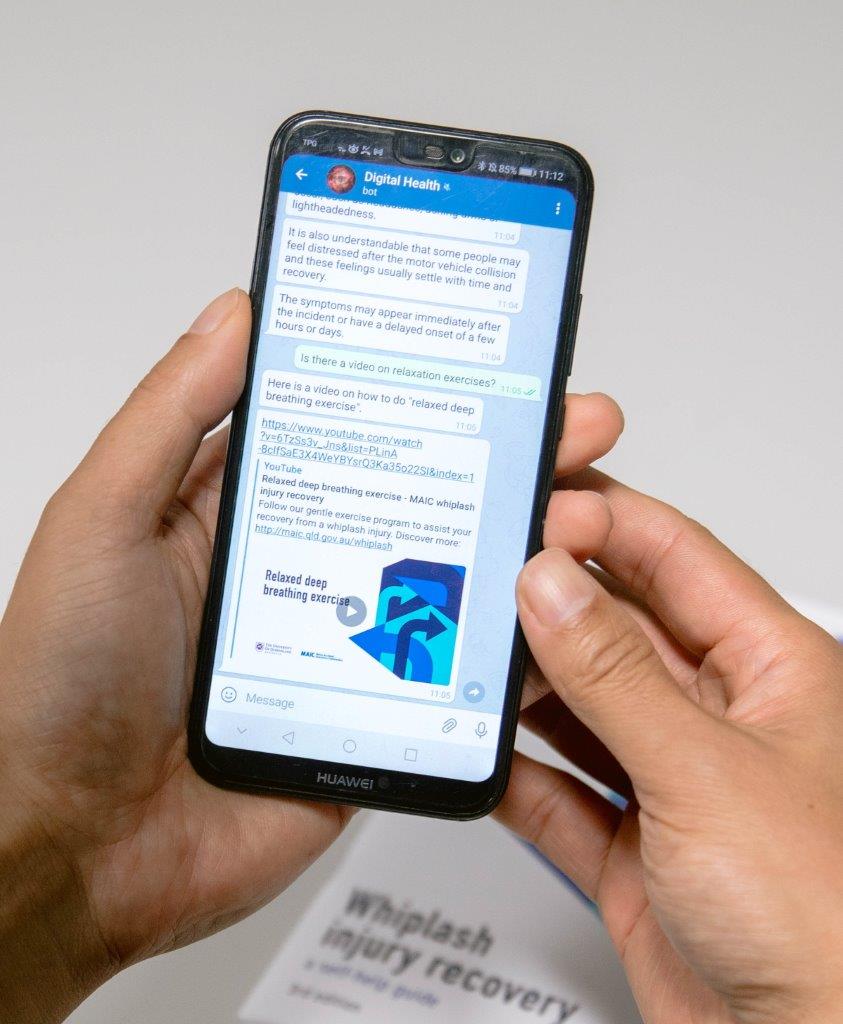 We invited consumers to contribute their valuable whiplash experiences and ideas for a self-management chatbot that we are developing at RECOVER.
We think that a chatbot may help people self-manage their neck pain and recovery from a whiplash injury. The chatbot will be designed to answer questions about whiplash and its management and be available 24/7 on your mobile device. We are building the chatbot to focus on the information provided in a booklet - “Whiplash injury recovery: a self-help guide (3rd edition)”, published by the Motor Accident Insurance Commission (MAIC).
During the consultation session, consumers offered their views and opinions about the chatbot and helped us understand better how people will interact with it. Consumers also spent time asking the chatbot questions about neck pain and exercise that were relevant to them.
Thanks to everyone who contributed to the excellent consultation session.
Modification of the Pain ROADMAP app for young people

Aim of research
To modify the original Pain ROADMAP app to ensure the app is engaging and suitable for younger populations (i.e. young adults and adolescents).
Pain ROADMAP is a mobile app to help people with chronic pain. Learn more about the original Pain ROADMAP here.
Consumer involvement activity
We formed a working group with expert pain clinicians around Australia. The working group had representation from the following organisations:
- Perth Children’s Hospital
- Queensland Children’s Hospital
- SKIP
- The Royal Children’s Hospital Melbourne
- St Vincent’s Brisbane
- Tess Cramond Pain and Research Centre
- The Australian e-Health Research Centre, CSIRO
- RECOVER Injury Research Centre, The University of Queensland
Consumer suggestions
- Wanted the option of measuring zones of regulation as opposed to pain
- Wanted to make most app features optional (e.g. measuring opioid intake)
- Wanted to gamify the app but requested that non-immersive gaming be used
- Agreed that game needed to suitable for different ages and gender neutral
- Wanted pain education built into the app
Outcome from consultation
- Modifications made to the original Pain ROADMAP app settings and widgets to accommodate consumer recommendations
- Pain education chatbot (Qwerty) created and added as an app feature
- Original Pain ROADMAP app gamified by drawing on existing gamified pain monitoring apps, population video games from the past and recommendations from the consumer working work. A demonstration of the final version of the Pain ROADMAP app game can be viewed in the video below.
Pain ROADMAP app game demonstration
Watch a video on the case of Ebony Shadows (YouTube 3:05)
Engaging Consumers and Community Members across the Research Spectrum: A Stepped Approach to Implementation by the RECOVER Injury Research Centre
Ms Alison Bell, Dr Atiyeh Vaezipour, Dr Carrie Ritchie, Ms Sarah Robins, Dr Esther Smits, Dr Jane Nikles
Consumer involvement in research is fundamental in developing research priorities, healthcare policy, and clinical practice guidelines. RECOVER Injury Research Centre, embarked on a journey to develop and implement a genuine consumer involvement strategy. The aim of the strategy was to include consumers and community members with a lived experience of injury, their carers, and health professionals not only as research participants, but across the entire research spectrum.
View our poster presentation here (PDF, 1 MB)
Virtual reality enabled intervention for pain management
Over the past decade, considerable advances in the technological capabilities of virtual reality (VR) have been achieved, enabling its successful application in the management of both acute and chronic pain conditions. Modern VR technology enables users to immerse in and interact with computer-generated simulations of three-dimensional environments. VR studies to date are focused primarily on distraction or physical rehabilitation and do not include the effect of VR-enabled mindfulness after exercise.  We invited consumers over the age of 18 years old experiencing chronic pain to wear VR headsets and trial a mindfulness VR application. We asked individuals’ views and opinions about using Virtual Reality enabled intervention for mindfulness and relaxation to modulate pain intensity and prevent pain flare-ups after exercise.
Participants were very positive about the experience and keen to use it as a part of their pain management.
“I never experienced anything like that…it was amazing…I never felt that relaxed for a while.”
Participants found the VR mindfulness intervention useful for creating visual aids by fully immersing individuals in the environments and facilitating the breathing exercise while meditating, which is very relaxing. They expressed a preference for more real-world environments, e.g., ocean beach, rainforest and visuals to prompt their breathing.
“I wasn’t really thinking about anything else. Whereas at home, if I were doing mindfulness, I’d be thinking about 5 million other things.”
Thank you to the consumers who took the time to contribute their thoughts and ideas to the mindfulness VR application. Consumers valuable contributions will inform the next steps of this project.
‘6-minute Walk Test in chronic pain’ study: consumer review of recruitment materials
 The consultation activity
We invited consumers with the experience of persistent pain to provide suggestions to improve recruitment strategies and the reach for an existing research project; ‘6-minute Walk Test in chronic pain’ study.
The project aims to recruit people with pain to participate in a study designed to trial a 6-minute walk test.
Recruitment for the study had been slow, and we hope to incorporate some suggestions from consumers to increase interest in the project.
Consumers provided feedback on the study advertisements and information page, including what is involved in participating in the study.
Consumers provided written feedback on three materials:
- The advertisements that were running on Facebook and Twitter to promote the project
- The “information page” which gives potential participants an overview of the project requirements.
- The “what is involved” section of the information page.
Feedback
Consumer made a number of suggestions around the wording of the advertisements, the image used and the re-ordering and highlighting different aspects of the study information page. The researchers incorporated many of the consumer suggestions.
Thank you to those consumers who contributed to this activity.
Grow Stronger mobile app with a gamification feature
What is the mobile app designed to do?
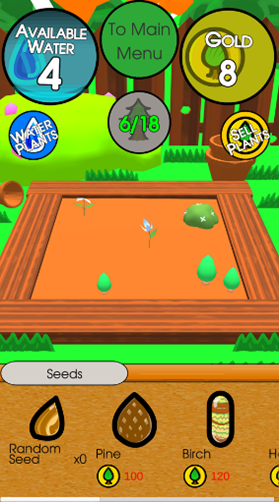 Home exercise programs are a vital component of at-home rehabilitation. Engagement with home exercise programs can be challenging, resulting in poor adherence.
The use of smartphone apps that function as electronic home exercise diaries may improve engagement by offering a convenient and portable way to access instructions for exercise and promoting goal-setting and self-monitoring. Apps may also use game features to encourage engagement, known as gamification.
We think that our mobile phone app, called Grow Stronger, will help motivate people to complete their home exercise programs. Achieving this will result in both short and long-term health benefits for people doing physical rehabilitation exercises at home.
The consultation activity
We invited consumers with the experience of pain from an injury or operation to contribute their ideas about the Grow Stronger app.
Consumers participated in a one-off consultation activity in the research planning phase - during the development of the app. Consumers provided valuable feedback on how they would have interacted with the app during their recovery and their thoughts about the gamification features.
Contributing consumer experiences and ideas for study to test how to choose the right treatment for the right person
 Project name
ADAPtive Trial and Data Asset (BACK-ADAPTDA) - Innovation in trial design and data analytics to deliver personalised management for back pain
What are the aims of the project?
Pain affects almost everyone, but we don’t know which treatments are best for which individuals. Although personalised care should improve outcomes, current research methods have provided very limited evidence to support this approach.
This project idea brings together a diverse group of world leaders in back pain, scientific discovery, and game-changing new clinical trial and data analytic methods to take a fresh approach to solve the problem of back pain with application into the future.
The consultation activity
In March 2022, we invited consumers to contribute their experience and ideas about a new project in development at The University of Queensland. Consumers participated in a one-off consultation activity in the research planning phase.
During the session, the project leads explained how they plan to use an “adaptive design”, which can make a clinical trial more flexible to better use resources and produce better outcomes for participants.
Consumers had the opportunity to discuss the project and provide specific input to the researchers about the study design and methods from the consumer perspective. Attendees were very interested in the novel methodology and requested access to a journal article which explains it in more detail.
Project leads
Professor Paul Hodges (School of Health and Rehabilitation Sciences, UQ) is a National Health and Medical Research Council (NHMRC) Senior Principal Research Fellow, Professor and Director of the NHMRC Centre for Clinical Research Excellence in Spinal Pain, Injury and Health at The University of Queensland (UQ). He is the lead chief investigator on an NHMRC Program Grant that includes colleagues from the Universities of Melbourne and Sydney.
Professor Michele Sterling (RECOVER, UQ) is the program leader of the Improving health outcomes after musculoskeletal injury program at RECOVER Injury Research Centre. She is the director of the NHMRC Centre of Research Excellence in Recovery Following Road Traffic Injuries.
PRioRTI: A multi-centre randomised placebo-controlled trial of pregabalin to prevent chronic pain after whiplash injury.
What are the aims of the project?

A focus of research at RECOVER is to provide improved early treatments with the aim of preventing the development of chronic pain after injury. In 2017, we received funding from the Emergency Medicine Fund of Qld to conduct a pilot trial of a short course (5-weeks scaled dose) of pregabalin (Lyrica) provided to patients within 48 hours of injury, in the hospital Emergency Department. Our rationale for choosing to test pregabalin is that it works by preventing the development of central pain sensitisation in the central nervous system, which we hypothesised may prevent chronic pain. Pregabalin is usually prescribed for chronic neuropathic pain and not acute pain.
The consultation activity
In June 2022, we invited consumers to contribute their experience and ideas about a new project in development. Consumers participated in a one-off consultation activity in the research planning phase.
During the session, consumers had the opportunity to discuss the project and provide specific input to the researchers about the study design and methods from the consumer perspective.
Consumers provided information about their experiences with pregabalin medication. They were also asked whether they would have been happy to take pregabalin in the early stages after their injury if there were a good chance it would prevent chronic pain?
Consumers lived experiences were incorporated into the project proposal.
Project leads
Professor Michele Sterling (RECOVER, UQ) is the program leader of the Improving health outcomes after musculoskeletal injury program at RECOVER Injury Research Centre. She is the director of the NHMRC Centre of Research Excellence in Recovery Following Road Traffic Injuries.
Co-design, development and feasibility of a consumer-driven immersive virtual reality tool for upper limb rehabilitation in the community
What are the aims of the project?
 The aim of this project is to develop and evaluate the feasibility of an immersive virtual reality (VR) tool for upper limb rehabilitation in the home.
Research shows that while most people who suffer a stroke survive and regain mobility, many survivors experience ongoing issues with upper limb function. More than two-thirds of survivors have motor deficits associated with poor quality of life and ability to participate in activities of daily living.
Early, intensive practice of functional tasks is effective for enhancing motor function post-stoke. However, evidence suggests that access to the appropriate dosage (frequency) of rehabilitation is an issue once people have returned to their homes/communities and are beyond the acute phase of recovery.
Virtual reality, combined with telerehabilitation, provides an opportunity for stroke survivors (and others) to connect with their clinicians and for continuity of care and continuation of therapy once they have returned to their homes.
The consultation activity
In August 2022, we invited consumers with the experience of long-term rehabilitation in the home to contribute their expertise and ideas about the VR project.
Consumers participated in a one-off consultation activity in the research planning phase. During the session, the research team outlined the project objectives and invited consumers to provide specific input about the study design and methods from the consumer perspective.
Consumers provided valuable information about the challenges to rehabilitation in the home and how virtual reality (VR) supported by healthcare professionals using telerehabilitation (e.g. via teleconference) could help people with their home exercises.
Consumers lived experiences were incorporated into the project proposal, and two consumers were invited to be a part of the research team moving forward.
Project team
Professor Trevor Russell, Project Lead and Director of RECOVER Injury Research Centre
Dr Megan Ross, Research Fellow
Dr Joshua Simmich, Research Fellow
Consumer Roundtable 2022: Bringing researchers to the consumer table to explore telehealth
The consultation activity
The Faculty of Health and Behavioural Sciences, the Faculty of Medicine and the RECOVER Injury Research Centre co-hosted a Consumer Roundtable 2022: Bringing researchers to the consumer table to explore telehealth on Monday the 10th of October 2022 at the beautiful Victoria Park Garden Room, Herston.
This was a consumer-led event and attendees included thirty-five consumers and twenty-two academics representing schools and centres across both faculties.
The event program included short presentations followed by group discussions.
Speakers included consumer representatives, Metro-North researchers, Queensland Health Telehealth Support Unit and UQ researchers.
Read more about the Consumer Roundtable.