
Technology-enabled rehabilitation
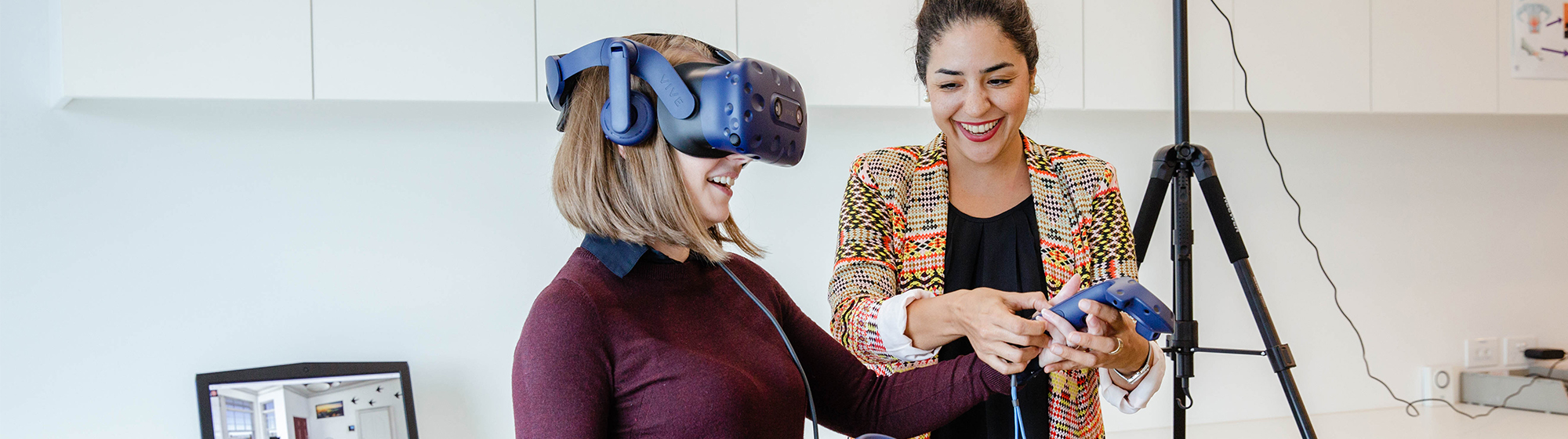
Goal: Developing more effective and efficient health services supported by technology innovation
Research focus: Digital health and Telerehabilitation
Program Leader: Professor Trevor Russell
Objective: Optimising rehabilitation pathways using technology
This program will broadly focus on developing more effective and efficient health services supported by technology innovation. This program of research will address service inequity frequently experienced by people with injuries and disability living in both urban and rural areas by investigating ways to optimise the delivery of evidence-based care regardless of geographical location. The program will encompass five areas:
- Optimal Service Models: This sub-theme will focus on investigating the efficacy and benefits of technology-enabled service models for people following motor vehicle crashes.
- Service Implementation: The focus of this sub-theme will be the implementation of technology-enabled services into clinical practice through collaboration with external service providers.
- Technical Innovations: This sub-theme will focus on the design, development and testing of various technologies to be used in both service model and service implementation research.
- Health Economics: Health economics research will underpin research activity where appropriate.
- Knowledge Translation and Implementation Science: This sub-theme will involve two interdependent areas of research, namely knowledge translation (exchange of knowledge/evidence developed by researchers with service providers and users) and implementation science (how to implement the knowledge into practice).
Research Areas
 Virtual reality wheelchair simulator
Co-designed with powerchair users, this pilot VR simulator helps people explore wheelchair options in realistic environments.
Virtual reality wheelchair simulator
Co-designed with powerchair users, this pilot VR simulator helps people explore wheelchair options in realistic environments.
Virtual reality for falls prevention
RECOVER is partnering with researchers, clinicians, and people with spinal cord injury (SCI) to explore how virtual reality (VR) can enhance falls management and community mobility training for wheelchair users. Through a co-design approach, the project will develop immersive, realistic VR experiences that enable people with SCI to safely practise managing falls and navigating everyday community environments. The initiative aims to build confidence, knowledge, and practical skills while supporting greater independence and participation. The project is led by Dr Kathryn Marshal, from UQ's School of Health and Rehabilitation Sciences and funded by the National Injury Insurance Scheme Queensland (NIISQ).
Learn more about the virtual reality for falls prevention project
Ballet for Brain Injury (Telebrain project)
RECOVER is partnering with the Queensland Ballet Community Health Institute to explore how the Ballet for Brain Injury program can be delivered online, improving access for people living with brain injury in regional and rural Queensland. The TeleBrain trial will evaluate whether the program’s physical, cognitive, emotional, and social benefits can be achieved through telehealth delivery. Designed for people with traumatic brain injury, stroke, and other neurological conditions, the program combines movement, music, and creative expression in an inclusive and adaptable format. This project is funded by the National Injury Insurance Scheme Queensland (NIISQ).
Learn more about the telebrain project
Pathways to Connection: A Novel Digital Tool for Clinicians and Queenslanders with Traumatic Brain Injury
Social isolation, limited access to services, and the complexity of navigating health and community systems can create ongoing barriers to recovery after a traumatic brain injury, particularly for people living in rural and regional Queensland. This project aims to co-design and prototype a digital navigation tool designed to help people with TBI, their families, and clinicians more easily identify and access health, community, and research services across Queensland. It is funded through the Queensland Brain Injury Collaborative (QBIC) Seed Funding Grant Scheme, with early community insights supported through a UQ HMBS Consumer and Community Involvement Kickstart Grant.
Learn more about Pathways to Connection
The Communication Café
The Communication Café is an immersive virtual reality (VR) coffee shop developed to support people with communication difficulties to translate the skills and strategies learnt in therapy to everyday environments, supported by their speech pathologist. Incorporating telehealth capability, this VR program can also be accessed by the person at home.
The Communication Café
The Communication Café is an immersive virtual reality (VR) coffee shop developed to support people with communication difficulties to translate the skills and strategies learnt in therapy to everyday environments, supported by their speech pathologist. Incorporating telehealth capability, this VR program can also be accessed by the person at home.
INSPIRE: Innovative Solutions for Treating Driving Anxiety Using Virtual Reality
Virtual Reality Exposure Therapy (VRET) uses immersive virtual reality (IVR) to recreate situations that may trigger anxiety or fear. By placing participants in realistic, computer-generated environments, VRET helps them face and manage these feelings in a safe, controlled setting. In this study, we will examine how effective Cognitive Behavioural Therapy (CBT) is when combined with IVR to treat driving anxiety after a motor vehicle crash. We will also assess whether this combined approach is practical, safe, and more effective than CBT alone. The virtual reality scenarios and therapy materials used in the INSPIRE trial were co-designed by a consumer advisory group with lived experience of driving anxiety after a motor vehicle crash.
Learn more about the INSPIRE trial
Virtual reality wheelchair simulator
Co-designed with powerchair users, this pilot VR simulator helps people explore wheelchair options in realistic environments.